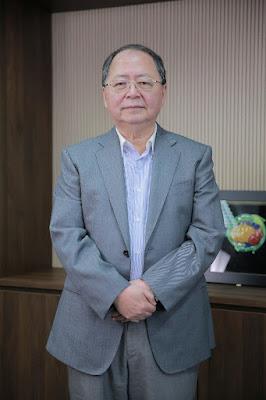
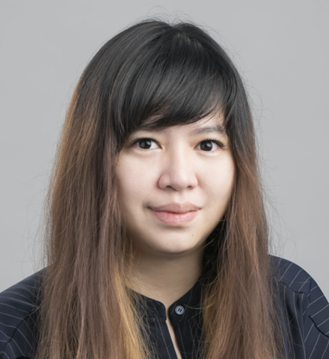
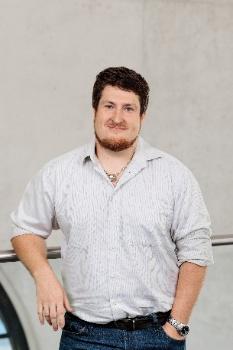
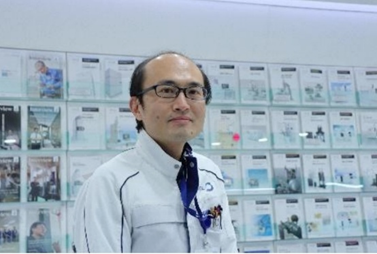
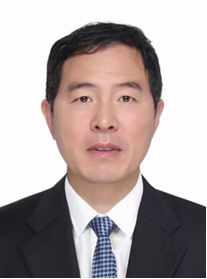
陳力俊系統校長為美國柏克萊加州大學物理學博士,現任台灣聯合大學系統系統主席及國立清華大學特聘研究講座教授。曾任國立清華大學校長、行政院國家科學委員會副主委、台灣聯合大學系統副校長、國立清華大學工學院院長、國立清華大學材料科學工程學系系主任兼所長、美國洛杉磯加州大學材料系研究員、國際期刊「Materials Chemistry and Physics」主編、中央研究院評議員、國家同步輻射研究中心董事長、東亞研究型大學協會會長、斐陶斐榮譽學會理事長、國際材料研究學會聯合會第二副會長、中華民國顯微鏡學會理事長、材料科技聯合會創會會長及中國材料科學學會理事長。
Address: Department of Materials Science & Engineering, National Taiwan University, No. 1, Sec. 4, Roosevelt Road, 10617 Taipei, Taiwan
BIOGRAPHY:
Dr. Hung-Wei (Homer) Yen is a materials scientist and microscopist based in Taiwan, where he leads the Microstructure & Defects Physics Group at National Taiwan University (NTU). His research decodes the fundamental microstructure–property relationships in advanced structural materials, including high-strength steels, biomedical titanium alloys, and high-entropy alloys. By leveraging state-of-the-art characterization techniques, Homer probes the inner atomic space of materials to uncover the mechanisms governing their performance. Recently, his group has pioneered research into hydrogen behaviors in materials, focusing on hydrogen embrittlement and hydrogen storage alloys. Notably, he established Taiwan’s first local electrode atom probe (LEAP) service platform, driving critical innovations in materials and semiconductor research. Homer has co-authored over 140 SCI-indexed journal papers (-index: 39), holds 10 patents, and has delivered more than 50 invited global lectures. His cutting-edge work is fueled by an extensive international network spanning the US, Europe, and the Asia-Pacific region.
PROFESSIONAL EXPERIENCES
Associate Professor Aug. 2018 - Aug. 2022
Dept. of Materials Science & Engineering, National Taiwan University
Assistant Professor Aug. 2014 - Aug. 2018
Dept. of Materials Science & Engineering, National Taiwan University
Atom Probe Scientist Sep. 2012 - Jul. 2014
Australian Centre for Microscopy & Microanalysis, The University of Sydney, Australia
Visiting Scientist Oct. 2011 – Nov. 2011
Department of Mechanical Engineering, The University of Hog Kong, Hong Kong
Research Associate Feb. 2011 - Aug. 2012
Dept. of Materials Science & Engineering, National Taiwan University
Awards
2010 Jeme Tien Yow Engineering Paper Award (Chinese Institute of Engineers, TW)
2016 Excellent Reviewer, Acta Materialia (Acta Materialia Inc.)
2017 Excellent Junior Research Investigators (National Science and Technology Council, TW)
2017 Outstanding Teaching Award-Top 10% (National Taiwan University, TW)
2019 Outstanding Teaching Award-Top 10% (National Taiwan University, TW)
2020 Excellent Junior Research Investigators (National Science and Technology Council, TW)
2020 Outstanding Teaching Award-Top 10% (National Taiwan University, TW)
2020 Young Excellent Scholar (Materials Research Society-Taiwan, TW)
2021 Distinguished Teaching Award-Top 1% (National Taiwan University, TW)
2021 Ta-You Wu Memorial Award (National Science and Technology Council, TW)
2021 Researcher Achievement Award (College of Engineering, National Taiwan University, TW)
2023 Young Chair Professor (National Taiwan University, TW)
2024 Excellent Reviewer, Acta Materialia (Acta Materialia Inc.)
2025 Young Excellent Scholar (Microscopy Society of Taiwan, TW)
Other Roles
2025 International Editorial Board, Materials & Design, Elsevier
2026 Scientific Editor (Triage Editor), Next Energy/Next Materials/Next Nanotechnology/Next Sustainability, Elsevier
Probing Materials Inner Space at the Atomic Scale for a Net-Zero Future
Hung-Wei (Homer) Yen
Department of Materials Science and Engineering, National Taiwan University
Achieving the global target of net-zero carbon emissions by 2050 demands a fundamental paradigm shift in materials design and manufacturing. To drastically reduce industrial carbon footprints, developing advanced green energy materials and optimizing metallurgical processes are critical imperatives. This presentation explores the recent breakthroughs in the nanoscale analysis of green metallurgical and energy materials using atom probe tomography (APT). Specifically, two topics will be discussed: (1) the underlying mechanisms of hydrogen trapping in complex carbides to prevent hydrogen embrittlement and (2) the nanostructural characterization of electrowon iron in green steelmaking. In the first topic, the results show that hydrogen trapping is not the solution to hydrogen embrittlement in very strong steels. In the second topic, the results unveil the heterogeneous distribution of impurity in pure iron. By probing these materials inner space at the atomic level, this work provides critical insights for tailoring next-generation materials essential for a sustainable and green future.
第44屆 台灣顯微鏡年會-特邀講者 朱麗安 博士
朱麗安 博士
Li-An Chu
Associated Professor
Department of Biomedical Engineering, National Taiwan University Brain Research Center, National Tsing Hua University.
FIELD OF SPECIALTY
Super-resolution microscopy imaging, Fluorescent Microscopy, Light sheet Microscopy, Electrophysiology, Biological Sample Clearing, Animal Behavior, Brain Neuroscience, Deep Learning Image Data Analysis.
EDUCATION
2009-2016 Ph.D. Institute of Biotechnology, National Tsing Hua University, Taiwan
2012-2013 Visiting Scientist Cold Spring Harbor Laboratory, New York, USA
2007-2009 Master Institute of Biotechnology, National Tsing Hua University, Taiwan
2003-2007 Bachelor Power Mechanical Engineering Department, National Tsing Hua University, Taiwan
CURRENT RESEARCH PROJECTS
1. Ultrafast Cyclic Immunofluorescence in CM level organs.
2. Multi-functional ligthsheet microscopy.
3. AI models for microscopy image analysis (Green AI).
HONOR
2025 未來科技獎 Best Technology Breakthrough Award at Future Technology Exhibition.
2025 年輕學者研究獎 Young Scholar Award, Microscopy Society, Taiwan
2024 年輕學者研究獎 Young Scholar Award, Biomaterials and Control Released Society, Taiwan
2023 未來科技獎 Best Technology Breakthrough Award at Future Technology Exhibition.
2020 國家新創獎 National innovation award, Clinical applications.
2020 新進教師研究獎 New Faculty Research Award, National Tsing Hua University, Taiwan.
2020 博⼠後學術研究獎 Postdoc Academic Research Award, Ministry of Science
Affiliation: TESCAN Group
Antonín Doupal is a Czech technology professional with over 15 years of experience at Tescan, specializing in advanced electron microscopy and semiconductor solutions. With a background in nanotechnology engineering and applied physics from Brno University of Technology, he has held roles in technical support, field service, product specialization, and international business development. He has contributed significantly to the expansion of Tescan technologies across Asian markets, including Japan, South Korea, China, and India. His expertise includes FIB-SEM systems, semiconductor failure analysis, and automation for complex workflows. He currently serves as Tescan Product Sales Leader for FIB-SEMs.
Faster and More Consistent TEM Lamella Preparation with the new Solaris 2 Ga⁺ FIB-SEM
Preparation of high-quality TEM lamellae, thinned to electron transparency at precisely targeted defect locations while minimizing amorphous damage remains one of the most demanding tasks in semiconductor failure analysis (FA) laboratories. Even for moderate node technologies, where <70 nm lamella thickness is sufficient for interface investigation or nanolayer metrology using in-situ 30 keV STEM or standalone S/TEM, achieving consistent results depends heavily on operator expertise.
Operators must manage a complex interplay of parameters, including FIB and SEM beam conditions, pattern placement, and lift-out tool control. These challenges are further amplified when working with diverse material systems, ranging from standard silicon-based devices with metallic interconnects to more demanding substrates such as glass, ceramics, or other hard materials prone to FIB-induced milling artifacts, charging or specimen bending during final thinning.
TESCAN SOLARIS™ 2 addresses these challenges by automating the entire TEM sample preparation workflow for environments where reproducibility and throughput are critical. The AI-driven TEM AutoPrep™ Pro reduces manual intervention by more than 75%, enabling unattended and overnight operation to increase system utilization in multi-user FA labs. In parallel, the new Orage™ 2 gallium FIB column enhances overall performance by delivering up to 40% higher milling throughput while reducing beam-induced artifacts such as curtaining, overspray, and subsurface damage. These improvements extend beyond TEM preparation to cross-sectioning and 3D characterization workflows.
Together, these advancements significantly reduce operator dependency while improving consistency, throughput, and data reliability in semiconductor failure analysis.
Affiliation: JEOL Ltd.
Naoki Hosogi is a Japanese application specialist with over 15 years of experience at JEOL, specializing in advanced cryo electron microscopy and biological solutions. With a background in structural and cell biology from Kobe University and National Institute for Physiological Sciences, he has held roles in technical and application development. He has contributed significantly to the expansion of JEOL technologies across world-wide markets. His expertise includes single particle analysis (SPA), Cryo electron tomography and cryo FIB/TEM workflows. He currently serves as JEOL Research & Development manager for cryo-EMs.
Advancing Cryo-EM: Improved Electron Optics and Automated Data Collection for High-Throughput Structural Biology
Cryo-electron microscopy (cryo-EM) has emerged as a powerful approach for determining the structures of biological macromolecules in near-native states, with single-particle analysis (SPA) and cryo-electron tomography (cryo-ET) enabling high-resolution and in situ structural insights. In this study, we present an integrated advancement of cryo-EM performance on the CRYO ARM™ 300 II, combining electron-optical improvements, AI-assisted workflows, and automated high-throughput data acquisition. Technological innovations in the electron optical system significantly enhance both imaging quality and efficiency. The implementation of fringe-free Köhler illumination enables flexible beam size control and minimizes interference fringes, thereby improving image quality and dose efficiency while extending the usable range of image and beam shift. This allows stable data acquisition over a large field radius and supports practical throughput of around 1,000 movies per hour. AI-driven workflows such as SmartScope [1] automate square and hole selection, reducing operator dependency and improving reproducibility. These hardware and software improvements provide a robust foundation for efficient and consistent data acquisition. In parallel, substantial advances were made in cryo-ET sample preparation through the development of the Cryo-Lameller system, a next-generation cryo-FIB-SEM platform tightly integrated with CRYO ARMTM workflows. Cryo-Lameller introduces a cartridge-based transfer system compatible with CRYO ARMTM, enabling stable and contamination-reduced specimen handling. The system incorporates a thermal conduction cooling stage that minimizes drift and vibration during operation, as well as new anti-contamination devices.
Reference [1] J. Bouvette, Q. Huang, A.A. Riccio, W.C. Copeland, A. Bartesaghi and M.J. Borgnia, “Automated systematic evaluation of cryo-EM specimens with SmartScope,” elife, vol. 11, e80047, 2022
Affiliation: Bruker
Huisheng JIAO is a senior electron microscopist with a wide range of experiences in microanalysis, instrument development, metallurgy, and materials characterisation fields. A proven leader with extensive experience in management, marketing strategy and customer support at the senior level. Co-author of two books of Electron microanalysis field (in Chinese).
Educations
Ph.D. in Materials Science and Engineering (2002), the University of Birmingham, U.K.
Master in Materials Science and Engineering (1995), Beijing Institute of Aeronautical Materials, China.
Bachelor in Physics (1992), Northeastern University, P. R. China
Career history
04.2021- Bruker China
Regional Sales Manager APAC
06.2020-12.2020 Yangtze River Delta Institute of Advanced Materials
Research Director
07.2014-05.2020 TESCAN China
Technology Director
Specialised in SEM, FIB and Micro CT, duties including managements of Marketing team,
10.2007-06.2014 Oxford Instruments (Shanghai)
Senior Application Manager
Specialised in EDS, WDS and EBSD systems, duties including Marketing
01.2005 – 09.2007 Gatan UK
Development Project Manager
In charging of the development project of Cryoplunge system for Cryo-TEM;
In charging of the development project of new Alto system for Cryo-SEM;
Performed quality audit of TEM products including holders and anti-contaminators;
Supplied customer support for TEM and SEM products (demonstration, training and installation).